



Hospital electrical safety- new technologies beyond devices with field in digital services
Read the Magazine in PDF
Efficient and safe healthcare requires consideration of devices, field services, and digital services at the equipment and facility levels. While technology is crucial, the human factor must be taken into account from the operator's perspective.
By - Mr Aghiles Chelil
Abstract
The future of healthcare is shaped by factors such as an ageing population, security threats, worker shortages, and a growing focus on people-centric care, among others. To address these trends and concerns, healthcare stakeholders have identified four pillars for the future of healthcare: people-centricity, efficiency, resiliency, and sustainability. This article focuses on ensuring optimum hospital electrical safety, which is crucial for creating a healing environment. It also emphasizes the importance of accounting for the human factor from an operator’s perspective and provides solutions to manage operational risk and minimize failures. The article also highlights the need to prioritize safety from the design phase through the building and maintenance phases with a focus on people as well as technology. Overall, digitization is crucial for achieving optimum safety outcomes, efficiency, resiliency, and sustainability benefits.
The Foundation of Healthcare of the Future
Healthcare experts agree that several factors, including an ageing population, security threats, cybersecurity, worker shortages, net-zero ambitions, and a growing focus on people-centric care, are shaping the future of healthcare. Recently, concerns about energy costs have also emerged. To address these trends and concerns, healthcare stakeholders have identified four pillars for the future of healthcare: people-centricity, efficiency, resiliency, and sustainability. In terms of people-centricity, safety and comfort are essential for creating a healing environment. While technological solutions are important for addressing electrical safety risks, human factors cannot be ignored. It is crucial to be aware of the risks, acknowledge the consequences, and have a risk management plan in place to ensure optimum hospital electrical safety.
Towards Optimum Hospital Electrical Safety
To ensure safety and efficiency in healthcare, there are three levels to consider: devices, field services, and digital services at the operator equipment and facility levels. While technology is important, it is essential to account for the human factor from an operator’s perspective. Proper training and crisis management skills are crucial to maintaining safe operations. Digital tools, such as video games and augmented reality, can aid in anticipating and managing crises. Augmented operator advisor tools, available on smartphones, tablets, or smart glasses, provide contextual information, remote expertise, and step-by-step procedures.
At the equipment and facility level, safety-driven electrical devices with flash protection relays and continuous monitoring sensors are critical, especially in operating theatres. The goal is to minimize failure rates and extend the lifetime of assets through proper installation, time-based maintenance, and modernization. Consulting activities, such as audits and safety studies, along with electrical distribution and digital twin services, can help manage operational risk and minimize failures. Converting paper diagrams to interactive online versions can also aid in managing and minimizing risk.
For equipment and safety, we have devices as a starting point, then the field services, good installation, commissioning, and time-based out is notably an online single-line diagram which is updated regularly. From there, we’re reaching the last top layer in terms of digital services called electrical structure. service plan.
Starting with equipment and safety, we begin with devices, followed by field services, good installation, commissioning, and an online single-line diagram that is updated regularly. The final layer in terms of digital services is called the electrical structure service plan. This involves moving from classic time-based maintenance to condition-based maintenance to improve efficiency, safety, resilience, and sustainability. To achieve this, the first step is to connect to the cloud with sensors and relays, which collect and process data resulting in meaningful analysis. The next step is to receive warning notifications if something goes wrong, followed by a synthetic dashboard. These tools empower you to take action, leveraging real-time information, periodic reports, and expert recommendations.
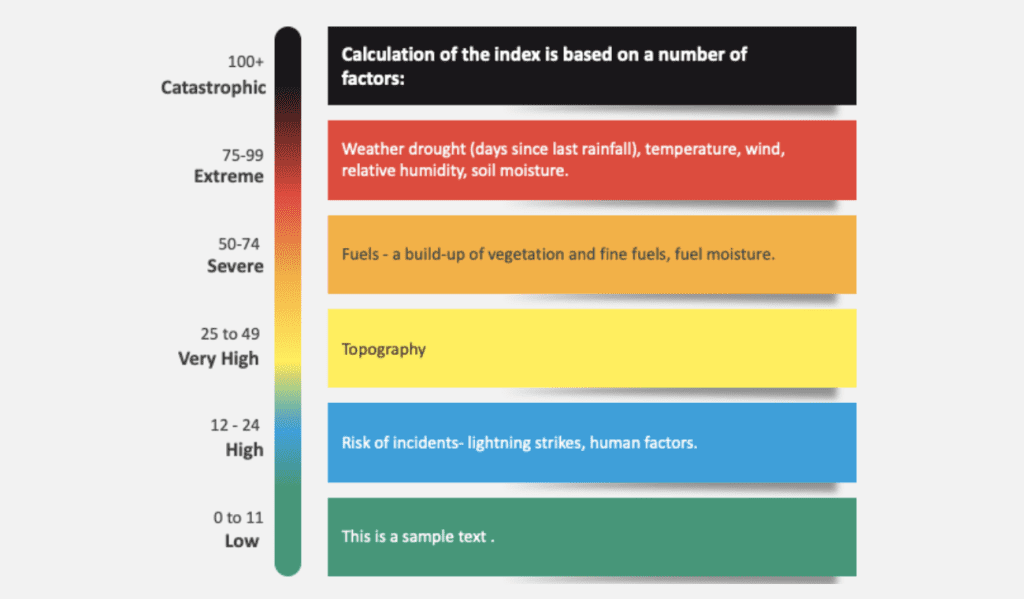
Fire Risk Index
This is a fire risk index that displays the level of risk for electrical fires based on data collected from connected sensors and protection relays. The higher the level of monitoring, the more accurate the fire index is. Dashboard systems show the need for urgent installation checks due to overheating cables and connection problems. Digitization is crucial for optimal electrical safety, as it improves efficiency, reduces maintenance, and saves energy while mitigating up to 75% of electrical failure risk. Additionally, sustainability can be improved by reducing greenhouse gas emissions by up to 25%. It’s important to prioritize safety from the design phase through the building phase and maintenance phase, with a focus on people as well as technology. This will lead to optimum safety outcomes, as well as efficiency, resiliency, and sustainability benefits. Field services should also be connected to the cloud to create a virtuous loop at the facility or organizational level. Waiting for an installation to deteriorate before addressing safety is not recommended, so it’s best to engage in safety measures throughout the entire lifecycle of the installation.
Conclusion
In conclusion, the future of healthcare is shaped by various factors such as ageing populations, security threats, worker shortages, and a growing focus on people-centric care. To address these trends and concerns, stakeholders in the healthcare industry have identified four pillars: people-centricity, efficiency, resiliency, and sustainability. In the quest for optimum hospital electrical safety, technology plays a vital role, but it is equally essential to factor in the human element. Proper training, crisis management skills, and digital tools such as video games and augmented reality can aid in anticipating and managing crises. Safety-driven electrical devices with flash protection relays and continuous monitoring sensors are critical, and converting paper diagrams to interactive online versions can also help minimize risks. Digitization is crucial for optimal electrical safety, as it improves efficiency, reduces maintenance, and saves energy while mitigating up to 75% of electrical failure risk. Prioritizing safety from design to building and maintenance phases, along with a focus on people as well as technology, leads to optimum safety outcomes, efficiency, resiliency, and sustainability benefits
Author
-

Healthcare Services Business Manager Global Field Services, Schnieder Electric